
Auracast in hearing aids and cochlear implants
Auracast in hearing aids and cochlear implants
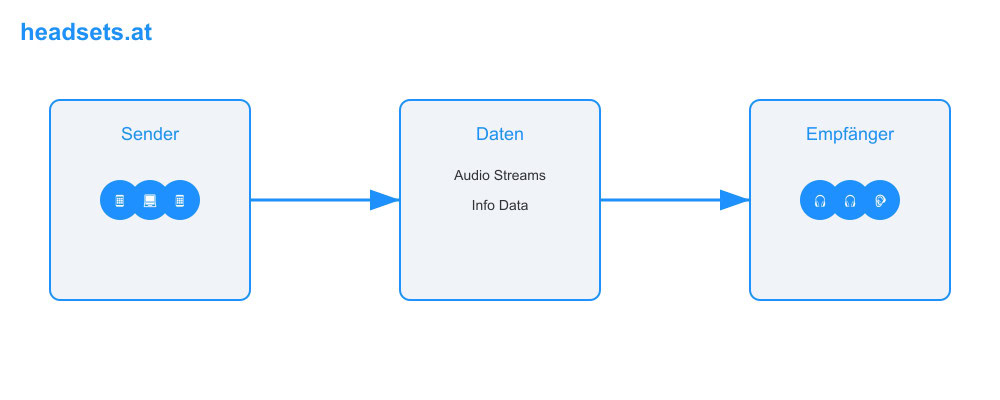
The entire hearing aid industry – both hearing aids and cochlear implants – is clearly moving towards Bluetooth LE Audio and Auracast. For us and for AV integrators, this means that Auracast is no longer just a concept for the future, but a technology that is already coming onto the market and will quickly become a standard option for hearing aids.
On the hearing aid side, there are already products that are officially Auracast-compatible. GN (ReSound and Beltone) and Starkey are the best-known pioneers. ReSound Nexia and Beltone Envision are marketed directly as “made for Auracast” and use Bluetooth LE Audio with audio transmission. Starkey’s latest premium product ranges (Edge AI, Omega AI) are also positioned as Auracast-compatible in professional circles and user reports.
At the same time, all major hearing aid manufacturers now offer Auracast-enabled products, even if the Auracast logo is not always used in marketing. Demant (Oticon Intent, Bernafon Encanta), Sonova (Phonak Lumity / Sphere / Infinio, Unitron Moxi V-R and Reach), WS Audiology (Signia Pure Charge&Go IX, Signia Active IX / Active Pro IX and the Widex/Rexton/Philips product ranges) and GN beyond Nexia (ReSound Vivia, Savi, ENZO Q) all offer models with integrated Bluetooth LE Audio hardware. These products are often referred to as “future-proof”: the chipset and radio already support LE Audio and are technically ready for Auracast, but full Auracast functionality depends on firmware updates and the maturity of the surrounding ecosystem (phones, TVs, public broadcasters).
A very similar trend can now be observed in the field of cochlear implants. Cochlear’s Nucleus 8 sound processor is being marketed as the first cochlear implant sound processor suitable for Bluetooth LE audio and Auracast audio transmission. With the appropriate firmware and in compatible locations, it should be able to connect directly to Auracast transmissions in places such as airports, theatres and conference centres. Cochlear’s latest product announcements mention LE Audio-enabled sound processors and the use of Auracast as part of future “smart” implant systems, with firmware updates again playing an important role. Other implant manufacturers, such as MED-EL and Advanced Bionics, have publicly announced their intention to support LE Audio and Auracast once the market and infrastructure are mature, although the details of Auracast branding and the timeline are not yet as concrete as in the hearing aid segment.
In practice, this means that a large and rapidly growing number of people with hearing aids or cochlear implants already have Auracast-enabled or Auracast-compatible devices. As manufacturers release software updates and more and more televisions, smartphones and AV systems support Auracast, these users will be able to receive Auracast transmissions without having to replace their devices.
We also offer hybrid systems, such as the Audiofils Opus AuraLoop for consultation situations, which, in addition to the AuraCast function, is also equipped with the T-coil function previously used for hearing aid wearers. There is also the AuraLoop+ version, which also features an easy-to-use additional receiver. This is what future-proofing looks like!